
What is Proteomics and Why is it Important for Cancer Treatments
The Role of Proteomics and Why Preservation Matters
Date: March 5, 2026
Why Proteomics is the Real Driver of Your Cancer Treatment
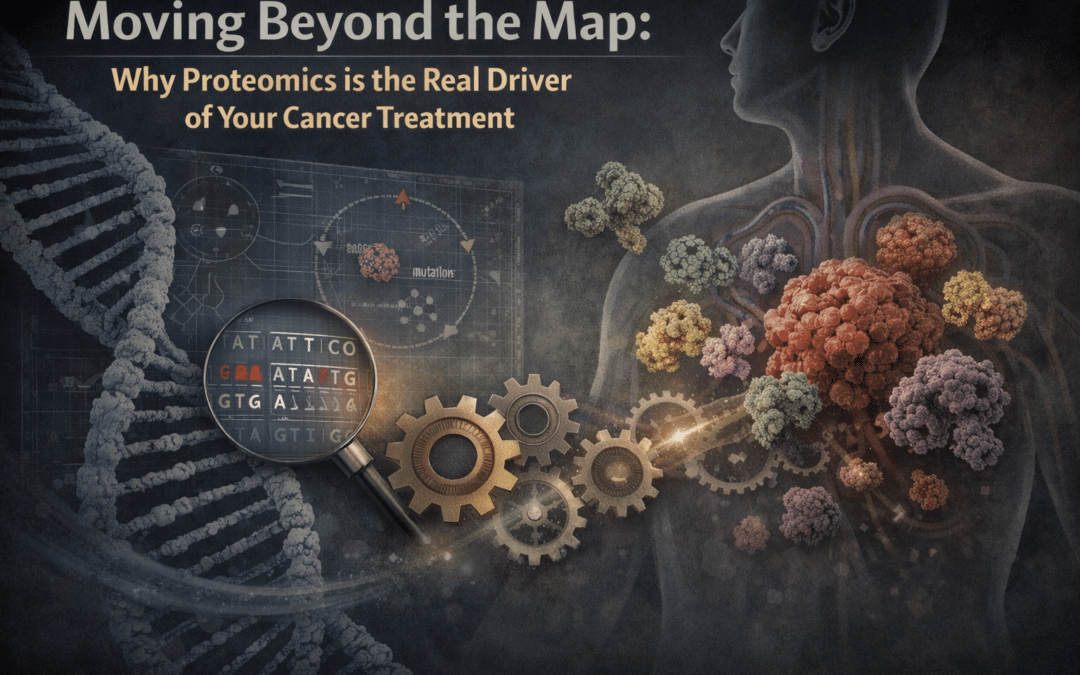
When you receive a cancer diagnosis, the first thing most people hear about is “DNA.” You might be told you need genomic testing to look for mutations—the “blueprint” of your cancer. While DNA is the map, proteomics is the actual machinery. If DNA tells us what might happen, proteins tell us what is happening in your body right now.
It is normal to feel overwhelmed by the alphabet soup of medical terms, but understanding proteomics is one of the most powerful ways to take control of your care. Most standard hospital biopsies use a preservation method that can actually damage these delicate proteins, potentially closing the door on advanced treatments before you even start. By planning for better tissue preservation today, you are ensuring your medical team has the highest-resolution data possible to build your treatment plan.
Quick Takeaways
-
DNA is the blueprint; Proteins are the builders. Proteomics looks at the active workers in a cancer cell.
-
Better Preservation = Better Data. Standard formalin-fixed (FFPE) samples often degrade proteins.
-
Precision Accuracy. Proteomics helps identify which drugs will actually bind to and kill your specific cancer cells.
-
Future-Proofing. Preserving “live-state” tissue now allows you to access proteomic tests that may not even exist yet.
What Exactly is Proteomics?
Proteomics is the large-scale study of proteins, which are the molecules that perform almost all biological functions in the cell. In cancer care, proteomic testing identifies the specific protein “signatures” driving a tumor’s growth, helping doctors select targeted therapies that are most likely to be effective for an individual patient.
Why Genomics is Only Half the Story
For years, the “Gold Standard” has been genomic testing—mapping your DNA. This is vital, but it has limits. Just because a “broken” gene (mutation) exists in your DNA doesn’t mean that gene is actually “turned on” and making the proteins that cause the cancer to grow.
Proteomics fills this gap. By measuring protein expression, doctors can see if a targeted drug has a “landing pad” on the cancer cell. Without this confirmation, you might be prescribed a powerful, expensive drug that has no way to actually interact with the tumor.
The Preservation Problem: FFPE vs. Proteomics
Most hospitals default to a preservation method called FFPE (Formalin-Fixed Paraffin-Embedded). While this is great for looking at the shape of cells under a microscope, the harsh chemicals used in the process can “cross-link” or damage proteins.
If you want the most accurate proteomics cancer testing results, you need tissue that hasn’t been chemically altered. This is why many patients are now choosing FFPE vs. Cryopreservation to keep their tissue in a “live-state” or “frozen-state” that protects the delicate protein structures.
How Proteomics Influences Your Treatment Options
Proteomics is often used in “functional” testing. Instead of just reading a report, scientists can sometimes see how your proteins react to specific therapies in a lab setting.
| Feature | Genomic Testing (DNA) | Proteomic Testing (Proteins) |
| Analogy | The architectural blueprint | The actual construction crew |
| Stability | Highly stable; easy to find | Fragile; requires careful preservation |
| Tells us… | What could happen | What is happening |
| Key Benefit | Identifies inherited risks | Identifies active drug targets |
Don’t Let Your Biopsy Become Obsolete
In the fast-moving world of oncology, new cancer biomarkers are discovered every month. If your tissue is stored in a way that preserves the proteins (Cryopreservation), you can go back to that “banked” tissue a year from now and run a new proteomic test that didn’t exist when you were first diagnosed. If the tissue was destroyed or chemically altered by standard processing, that door is closed forever.
SpeciCare Pro Tip: Always ask your surgeon before the biopsy: “How much tissue are you taking, and can we cryopreserve a portion of it for advanced proteomic and functional testing?”
Is your biopsy scheduled for this week? Don’t let the hospital’s “standard” process limit your future options. Most patients don’t realize they have a choice in how their tissue is handled.
[Talk to SpeciCare Today – Learn How to Preserve Your Options]
Proteomics and Immunotherapy: Finding the Right Match
Immunotherapy is one of the most exciting breakthroughs in cancer care, but it doesn’t work for everyone. Many of the indicators (biomarkers) that tell a doctor if immunotherapy will work are proteins on the surface of the cell. If these proteins are damaged during the biopsy preservation process, your test results might come back as a “false negative,” potentially disqualifying you from a life-saving treatment.
Common Questions About Proteomics (Q&A)
Q: Is proteomics more expensive than DNA testing? A: Often, the cost is similar, but the value is different. While DNA testing is more common, proteomics provides the “real-time” data needed for many modern targeted therapies. Insurance coverage varies, which is why having the right testing before treatment strategy is essential.
Q: Can I get proteomic testing done on old biopsy samples? A: It depends on how they were stored. If they were kept in FFPE blocks, some testing is possible, but it is much less accurate than testing performed on cryopreserved (frozen) tissue.
Q: Does every cancer patient need this? A: While it is becoming more common, it is especially critical for patients with rare cancers, aggressive tumors, or those who have not responded to standard “first-line” treatments.
Q: How do I know if my hospital offers this? A: Most community hospitals do not perform advanced proteomics in-house. They usually send samples out to specialized labs. You must ensure the tissue is collected and preserved correctly at the start to make this possible.
Q: What is the difference between Proteomics and Transcriptomics? A: Transcriptomics looks at RNA (the instructions), while Proteomics looks at the proteins (the final product). Both are part of “multi-omics,” but proteomics is generally considered closer to the actual behavior of the cancer.
Q: Will this delay my treatment? A: In most cases, no. The preservation happens at the time of the biopsy. The testing can be done simultaneously with other labs, often taking 7–14 days for a full report.
What to Ask Your Doctor
-
“Does my treatment plan rely on specific protein expression (like HER2, PD-L1, etc.)?”
-
“Are we saving enough tissue for both genomic and proteomic testing?”
-
“Can we use cryopreservation to ensure the proteins in my sample don’t degrade?”
-
“If this treatment stops working, will we have enough preserved tissue to run new tests?”
-
“Does the lab you use for pathology specialize in functional proteomics?”
-
“How will the results of this proteomic profile change my ‘Plan B’ options?”
Summary
-
Proteomics provides a real-time look at what is driving your cancer’s growth.
-
DNA is only the start; proteins are the targets for most modern cancer drugs.
-
Standard hospital preservation (FFPE) can damage proteins, making testing less accurate.
-
Cryopreservation is the preferred method for protecting tissue for advanced proteomic analysis.
-
Advocating early—before your biopsy—is the only way to ensure these options remain open.
You only get one chance to preserve your tissue in its best state. Once the biopsy is placed in formalin, the chemistry of your cancer cells changes forever. SpeciCare helps patients and families navigate the complex world of tissue banking and advanced testing.
Contact SpeciCare Now to Secure Your Future Options – info@specicare.com
Caregiver Note: If your loved one is feeling too overwhelmed to handle the logistics, you can advocate for them. Ask the surgical team about tissue preservation today.
Disclaimer: This article is for educational purposes only and is not medical advice. Talk with your oncology team about what’s right for your situation.
Recent Comments