
Your cryopreserved tissue Unlocks Access to Advanced Testing, Precision Treatments and More Clinical Trials – Ask Your Doctor About Cryopreservation
Your cryopreserved tissue Unlocks Access to Advanced Testing, Precision Treatments and More Clinical Trials – Ask Your Doctor About Cryopreservation
Your cryopreserved tissue Unlocks Access to Advanced Testing, Precision Treatments and More Clinical Trials – Ask Your Doctor About Cryopreservation




Most hospitals use a 100-year-old preservation method called FFPE (Formalin-Fixed Paraffin-Embedded) because it’s simple, cheap, and meets basic diagnostic needs. But here’s what they don’t tell you: FFPE tissue is essentially dead. The fixation process destroys the living cells and viable DNA needed for advanced genomic testing, immunotherapy selection, and clinical trial enrollment. Once your tissue is fixed in formalin, those doors close permanently.
The cost of this outdated standard? A disturbing number of first-line cancer treatments fail to produce the desired result—not because the drugs don’t work, but because they’re the wrong drugs for that specific patient’s cancer. While doctors cycle through trial-and-error treatments, precious months pass, tumors grow, and patients endure debilitating side effects from therapies that were never going to work. Cryopreservation changes this equation entirely. By cryopreserving living tumor tissue at -196°C, you maintain access to the advanced testing that creates a treatment roadmap—matching you with the right therapy, the first time, and opening doors to clinical trials that could save your life.


Think of this as a “test drive” for cancer drugs—but using your actual tumor cells. Scientists take a small piece of your preserved tumor and expose it to up to 300+ different cancer medications in a lab. They watch which drugs kill your specific cancer cells and which ones don’t work at all.
Instead of your doctor guessing which chemotherapy might work, you get actual proof of what will kill your cancer before it ever enters your body. This means you skip the treatments that won’t work and start immediately with the ones that will.
About half of all cancer patients take medications that don’t work for them. That’s months of feeling sick from chemotherapy while the cancer keeps growing. Testing eliminates that guesswork and gets you on the right treatment from day one.

Every cancer has its own unique genetic “fingerprint”—mistakes in the DNA that made the cancer grow in the first place. Genomic analysis reads your tumor’s DNA to identify exactly which genetic mutations are driving your specific cancer, providing a clear roadmap for precision medicine therapy.
Once doctors know your cancer’s genetic mistakes, they can prescribe targeted drugs designed to attack those exact mutations. It’s like having a key made specifically for your lock, instead of trying 50 different keys hoping one works.
Two people with “lung cancer” might have completely different genetic mutations. The drug that saves one person’s life might do nothing for the other. Genomic testing shows which targeted therapies will actually work for YOUR cancer, not just “lung cancer in general.

Immunotherapy trains your own immune system to recognize and attack cancer cells. But not every patient’s immune system can “see” their cancer, and not every cancer can be attacked this way. Precision testing checks whether your specific tumor has markers that make it vulnerable to immunotherapy drugs.
Immunotherapy can be incredibly powerful—sometimes even curing cancers that chemotherapy couldn’t touch. But it only works for about 20-40% of patients, depending on the cancer type. Testing tells you if you’re in that group BEFORE spending months on expensive treatments that might not help you.
Immunotherapy drugs can cost $150,000+ per year and cause serious side effects. If your cancer isn’t a good candidate, you need to know that early so you don’t waste time and money on a treatment that won’t work—and instead focus on therapies that will.

Clinical trials test new cancer treatments that aren’t available to the general public yet—often breakthrough drugs that could be more effective than standard treatments. Many trials require very specific qualifications, including having cryopreserved living tumor tissue that can be tested outside the patient body.
You get access to cutting-edge treatments years before they’re available in regular hospitals, often at little or no cost. Some of today’s best cancer drugs were only available through clinical trials 5-10 years ago.
If standard treatments aren’t working—or if you want the most advanced options available—clinical trials might offer your best chance. But most trials require viable tumor tissue for testing and research. Once your tissue is preserved in formalin (the standard way), you’re automatically disqualified from about 70% of trials. Cryopreservation keeps those doors open.
Traditional tissue preservation gives you a diagnosis. Cryopreservation gives you a diagnosis PLUS a roadmap to the treatments most likely to work for your unique cancer—and access to breakthrough options that could save your life.
From the moment you enroll in accessing breakthrough treatments, we’re with you every step of the way

What happens: After you enroll with Specicare (it takes about 10 minutes), we coordinate directly with your surgeon and hospital. We send a specialized collection kit to the surgical team with clear instructions and all the equipment they’ll need. Your medical team doesn’t have to figure anything out—we handle the logistics.
What you do: Nothing. You focus on preparing for surgery while we work behind the scenes to make sure everything is ready.
Why this matters: Your surgery is already stressful enough. Our team eliminates any extra burden on you or your doctors. When surgery day arrives, everyone knows exactly what to do, and you have peace of mind knowing your tissue will be preserved correctly.
Timeline: We typically coordinate with your surgical team 3-7 days before your procedure.
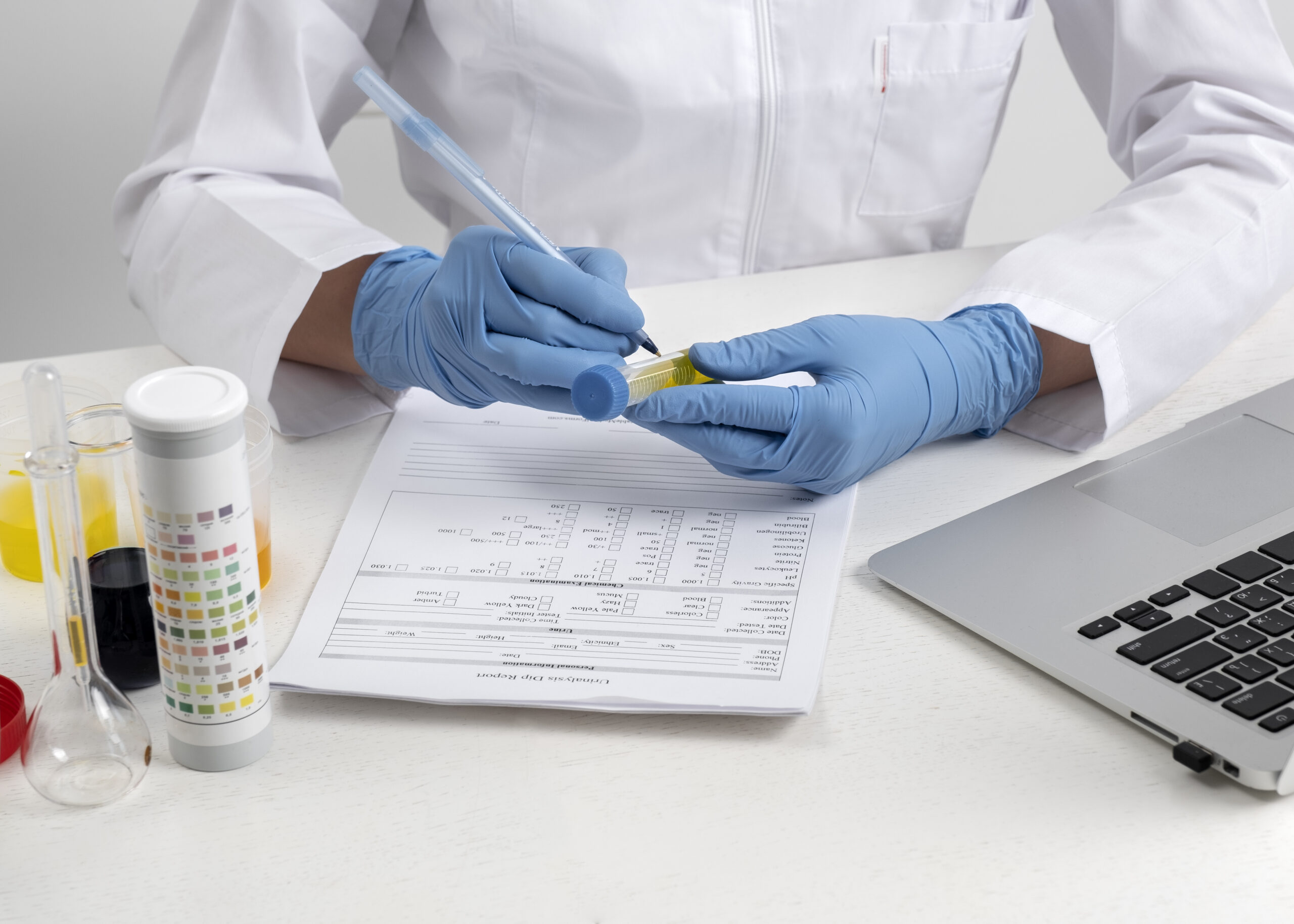
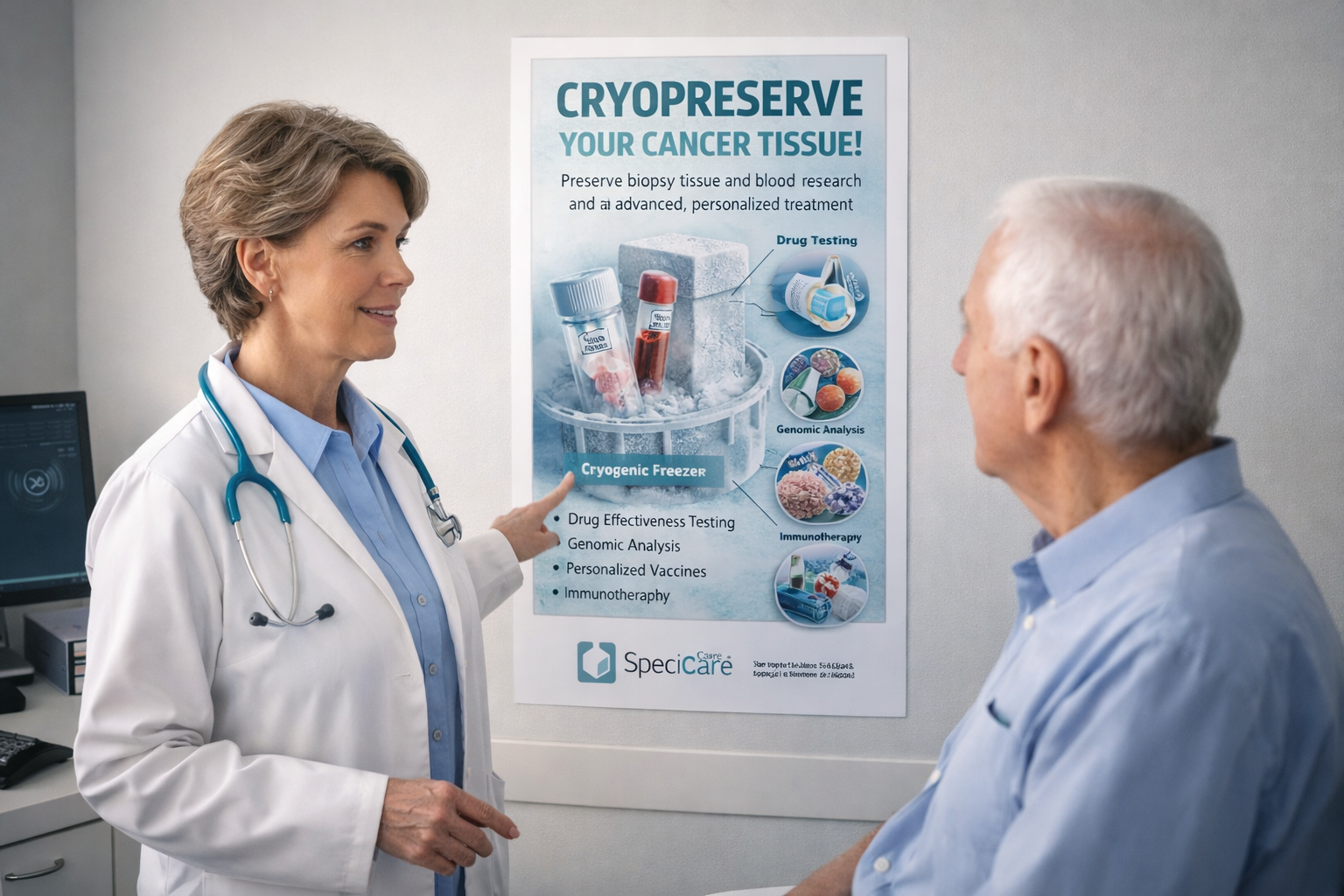
What happens: During your surgery, after the tumor is removed and the pathology team takes what they need for diagnosis, a small portion of your tumor is placed into our specialized cryopreservation container. This happens in the operating room—nothing about your surgery changes, and it adds zero time to your procedure.
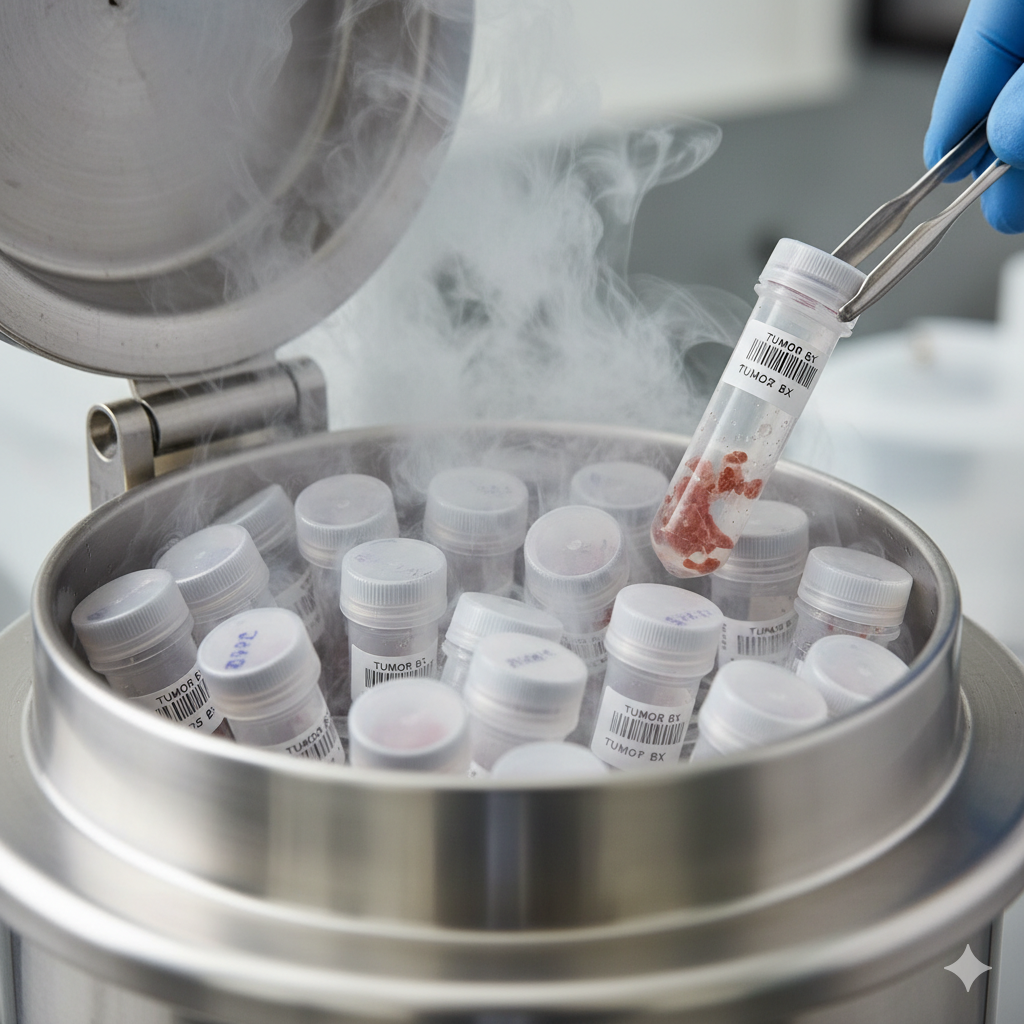
The science: Your tissue is immediately cryopreserved at ultra-low temperatures (eventually -196°C in liquid nitrogen) to keep the cells alive and your DNA intact. This happens within minutes of removal, ensuring maximum quality for future testing.
What you do: You’re already under anesthesia. Your surgical team handles everything while you’re in surgery just as they normally would.
Why this matters: Timing is everything. The faster tissue is cryopreserved after removal, the better quality it maintains for advanced testing. Our system ensures your tissue is protected at the moment it matters most—while it’s still fresh and viable.

What happens: Your preserved tissue is transported to our secure, FDA-compliant cryostorage facility within 24-48 hours. It’s stored in our monitored systems where it remains viable for decades. You receive confirmation once your tissue is safely in storage, along with your account access to track everything.
What you do: Recover from surgery. Meet with your oncologist. Make treatment decisions. Your tissue is safely waiting whenever you—or your doctor—needs it.
Why this matters: You’re not racing against a clock. Unlike standard FFPE tissue that limits your options permanently, your cryopreserved tissue gives you time to make informed decisions. If you want a second opinion, need to research treatment options, or want to explore clinical trials, your tissue remains ready for advanced testing whenever you need it—even years later.
Peace of mind: Our facility has 24/7 monitoring, backup power systems, and redundant storage. Your tissue is as safe as it can possibly be.
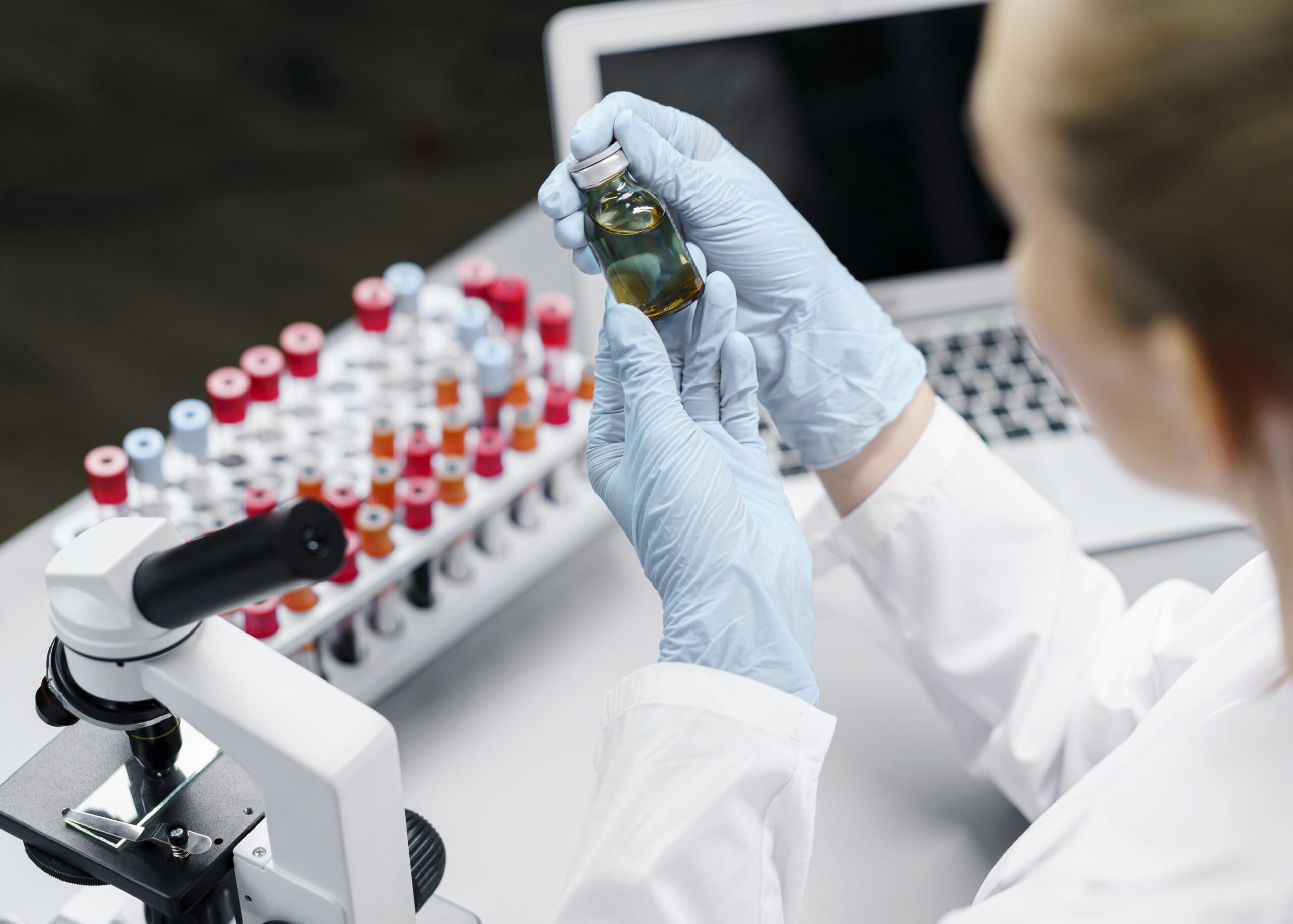
What happens: When you and your oncologist are ready to make treatment decisions, we arrange for comprehensive testing on your preserved tissue. This can include:
What you do: Authorize the testing (we’ll help you understand what each test does). We handle shipping samples to our partner labs and coordinate with your oncologist to deliver results.
The timeline: Most comprehensive test results come back within 2-4 weeks—often faster than standard treatment cycles, meaning you can have answers before starting therapy.
Why this matters: This is where cryopreservation changes everything. Instead of starting treatment based on “what usually works for this type of cancer,” your oncologist gets a precise roadmap showing which treatments will work for YOUR specific cancer. You skip ineffective treatments entirely and start with therapies proven to attack your tumor’s unique weaknesses.
The difference: Patients with advanced testing data often see better outcomes, fewer side effects, and faster responses because they’re on the right treatment from day one.

What happens: Our team continuously monitors clinical trials that match your cancer type and genetic profile. When promising trials open that you qualify for, we notify you and your oncologist. If you’re interested, we facilitate the enrollment process and provide the tissue samples required for trial participation.
What you do: Review trial opportunities with your doctor and decide if participation makes sense for your situation. If you enroll, your preserved tissue often satisfies the trial’s biospecimen requirements—something most patients can’t provide.
Why this matters: Many breakthrough cancer treatments today were only available through clinical trials 5-10 years ago. Patients with cryopreserved tissue have access to trials that others simply can’t join. These aren’t experimental long-shots—they’re often cutting-edge treatments from the world’s leading cancer research centers.
Your advantage: A good number of precision oncology trials require viable tumor tissue. FFPE tissue disqualifies most patients automatically. Cryopreservation keeps you eligible for opportunities that could extend or save your life.
Ongoing support: Even if you don’t need trials immediately, we continue monitoring your case. If new trials emerge months or years later that could help, we’ll reach out. Your preserved tissue creates options long into the future.
From enrollment to breakthrough treatments, you’re never alone. Our team handles logistics, coordinates with your medical team, manages your tissue with pharmaceutical-grade security, and opens doors to advanced testing and trials that most cancer patients never access.
You get to focus on what matters: healing, spending time with family, and making informed treatment decisions—knowing you have every possible option at your fingertips.
Questions? Call us at 1 (833) 242-CURE (2873) or schedule a 15-minute consultation to learn how Specicare fits into your specific treatment plan.
PMC - Precision Oncology Comes of Age (referencing NEJM): "Tissue testing is one of the major factors to consider when ordering next-generation sequencing. The current gold standard allows for histologic interpretation and non-DNA–based alterations. However, due to tumor heterogeneity, a biopsy may capture only a partial genomic landscape of a patient's disease, which can misguide interpretation and treatment decisions. High-quality, cryopreserved specimens are required for best information."
PMC - MD Anderson (Tissue is Still the Issue): "Although liquid biopsy technology has emerged, tissue-based comprehensive evaluation still remains the gold standard. Image-guided biopsy procedures for tumor characterization have now been well integrated into clinical trials to facilitate biomarker development, optimize patient selection, and understand resistance and/or response mechanisms. In the era of precision oncology, tissue is still the issue."
National Cancer Institute - MDPI Encyclopedia (2023): "The ability to produce inexhaustible cell populations using CR technology from small biopsies and cryopreserved specimens has the potential to transform biobanking repositories and current pathology practice by enabling genetic, biochemical, metabolomic, proteomic, and biological assays, including chemosensitivity testing as a functional diagnostics tool for precision cancer medicine."
MD Anderson Precision Oncology Platform (2015): "Precision oncology, or personalized cancer medicine, is based on the observation that cancers, even within the same disease site, are driven by a multitude of different molecular aberrations. The lack of scientific and informatics decision support for oncologists can lead to no action being taken or suboptimal therapeutic choices being made, which could affect the clinical outcome of a patient."
Yes, and this is actually the ideal time to enroll. Specicare can coordinate tissue preservation for both surgical biopsies and tumor removal procedures. The earlier you enroll, the more time we have to coordinate with your surgical team and ensure everything is prepared. Contact us as soon as your biopsy or surgery is scheduled—even if it’s just a few days away.
We recommend contacting us at least 3-7 days before your scheduled procedure to allow time for coordination with your hospital and surgical team. However, we’ve successfully arranged tissue preservation with as little as 24-48 hours notice. If your surgery is coming up quickly, call us immediately—we’ll do everything possible to make it work.
Tissue from your initial biopsy can be cryopreserved if there’s enough material after the pathology lab completes their diagnostic testing. However, the main tumor removal surgery typically provides more tissue for comprehensive preservation and future testing. We recommend enrolling before your biopsy so we’re ready for whichever procedure provides the best tissue sample.
No. Cryopreservation never interferes with your surgery, biopsy procedure, or diagnostic pathology. The pathology lab always takes what they need first for your diagnosis. Only after their samples are collected is a small additional portion preserved for you. Your standard cancer diagnosis and surgical outcomes are completely unaffected.
Most surgeons are very supportive once they understand the benefits for their patients. Specicare provides clear instructions and all necessary collection materials to make the process simple for surgical teams. We’ve worked with thousands of surgeons across the country. If your surgeon has questions, we’re happy to speak with them directly to explain the process and benefits.
Cryopreservation of tissue, blood, or aspirate is $3,999. Long-term cryostorage is $69 per month or $690 per year for up to 15 total aliquots, with additional aliquots stored for $5 each. Shipping and handling is $599 with four or more days’ lead time or $899 for expedited service with three or fewer days’ lead time. Easy financing options may be available with rates as low as 0%.
Advanced testing is priced separately based on the specific tests you and your oncology team choose to pursue. Cryopreserved tissue can preserve access to advanced testing options that may help inform treatment decisions, including genomic analysis, functional drug testing, immunotherapy evaluation, and clinical-trial opportunities.
Coverage varies by insurance provider and plan. Some insurance companies cover tissue preservation as part of diagnostic services, while others do not. We provide detailed invoices and documentation to help you submit claims. Many patients choose to pay out-of-pocket because the cost is minimal compared to the potential benefits and the cost of ineffective treatments.
It depends on timing and how your tissue was handled. If your surgery was within the past 24-48 hours and tissue was stored properly (refrigerated, not frozen or fixed in formalin), we may still be able to cryopreserve it. Contact us immediately—every hour matters. If your tissue was already fixed in formalin (FFPE), unfortunately cryopreservation is no longer possible, but we can discuss advanced testing options that may still be available.
Once tissue is fixed in formalin and embedded in paraffin (FFPE), it cannot be cryopreserved because the fixation process kills the cells permanently. This is why enrolling before surgery is so important. FFPE tissue can still be used for some genetic testing, but it eliminates access to treatment effectiveness testing, many clinical trials, and several advanced diagnostic options that require living cells.
Tissue preserved in liquid nitrogen at -196°C can remain viable for decades—potentially your entire lifetime. Medical research facilities have successfully used cryopreserved tissue samples that were frozen 20-30 years ago. As long as tissue remains at proper cryogenic temperatures, cellular viability and DNA integrity are maintained indefinitely.
The ideal time is before starting first-line treatment, so you can use test results to guide initial therapy selection. However, testing is valuable at any point in your cancer journey—before starting treatment, when considering treatment changes, if initial treatments aren’t working, when exploring clinical trial options, or if you’re seeking a second opinion. Your preserved tissue remains available for testing whenever you and your oncologist decide it would be beneficial.
Treatment effectiveness testing (drug sensitivity assays), functional immunotherapy testing, organoid creation, certain RNA-based tests, and most precision oncology clinical trials require viable (living) tissue that can only come from cryopreservation. Comprehensive genomic sequencing can be performed on both FFPE and cryopreserved tissue, but cryopreserved samples provide higher quality data and enable additional testing FFPE cannot support.
Genetic testing analyzes your tumor’s DNA to identify mutations and predict which drugs might work based on those mutations. Treatment effectiveness testing actually exposes your living cancer cells to different drugs in a laboratory and directly observes which medications kill your specific cells. Think of genetic testing as reading the instruction manual, while effectiveness testing is actually test-driving the car. Both provide valuable information, and cryopreserved tissue enables you to do both.
Yes. Specialized tests can evaluate whether your tumor expresses biomarkers that make it vulnerable to specific immunotherapy drugs (like PD-L1 expression levels) and whether your tumor’s microenvironment supports immune response. Some advanced tests can even predict your likelihood of responding to specific immunotherapy medications before you take them, helping you and your oncologist avoid treatments unlikely to work for your specific cancer biology.
Most comprehensive genomic testing returns results within 2-3 weeks. Treatment effectiveness testing typically takes 2-4 weeks depending on the specific assays requested. Immunotherapy biomarker testing often returns results within 1-2 weeks. These timelines are generally faster than typical treatment cycles, meaning you can have actionable data before starting therapy or when considering treatment changes.
Approximately 70% of precision oncology clinical trials require viable tumor tissue for research, biomarker testing, or to verify eligibility criteria. Patients with only FFPE tissue are automatically disqualified from most of these trials. Cryopreserved tissue satisfies these requirements, dramatically expanding your clinical trial options—especially trials investigating targeted therapies, immunotherapies, and personalized treatment approaches.
Yes. Our team monitors clinical trials that match your cancer type and continuously evaluates new trial openings against your medical profile. When promising trials emerge that you may qualify for, we notify you and provide information to discuss with your oncologist. We also facilitate the tissue sample requirements for trial enrollment, which many patients cannot provide without cryopreservation.
No. You maintain complete control over your preserved tissue. No testing, research access, or clinical trial participation happens without your explicit written authorization. You decide if and when your tissue is used, what it’s used for, and who has access to it. Specicare acts as the custodian of your tissue, but you remain the owner and decision-maker.
Tissue licensing allows qualified research institutions to access de-identified tissue samples for cancer research studies. If you choose to participate, you may receive compensation when your tissue is licensed to researchers. More importantly, you contribute to cancer research that could lead to breakthrough treatments for future patients. Participation is completely optional and never affects your own access to your tissue for treatment purposes.
Enrollment takes about 10 minutes and can be completed online, over the phone, or via video consultation with a tissue specialist. Once enrolled, we immediately begin coordinating with your surgical team. The earlier you enroll relative to your surgery date, the smoother the coordination process. Contact us at 1 (833) 242-CURE (2873) or visit [ENROLLMENT URL] to get started.
You’ll need your basic contact information, insurance details (if seeking coverage), your surgery or biopsy date and location, your surgeon’s name and hospital information, and your cancer diagnosis or suspected diagnosis. If you don’t have all these details yet, we can still begin the enrollment process and gather remaining information as it becomes available.
We’re here to help. Call us at [PHONE] to speak with a tissue preservation specialist who can answer your specific questions, or schedule a free 15-minute consultation at [SCHEDULING URL]. You can also email questions to [EMAIL] and we’ll respond within 4 business hours. We understand this is a critical decision during a difficult time—we’re committed to providing clear, honest answers to every question you have.
Your tissue is stored in our FDA-compliant cryogenic storage facility with pharmaceutical-grade security protocols. Storage tanks maintain constant temperatures of -196°C with 24/7 monitoring, automated alert systems, backup power generators, and redundant storage systems. Our facility meets the same standards used by major medical research institutions and has never experienced a storage failure.
Yes. Your tissue belongs to you and moves with you regardless of where you receive treatment. If you change oncologists, hospitals, or even move across the country, we coordinate tissue sample shipping to your new medical team whenever testing or treatment requires it. Your Specicare account and tissue access remain active regardless of your location.
Your tissue storage and access rights can be designated to family members, transferred to a research institution per your wishes, or disposed of according to your written instructions. We recommend completing our tissue beneficiary designation form, which allows you to specify what happens to your preserved tissue and who makes decisions about it if you’re unable to do so.
Yes. You can discontinue storage service at any time. If you choose to cancel, you have several options: have your tissue transferred to another storage facility, donate it to cancer research (with appropriate consent), or have it disposed of according to medical waste protocols. We require 30 days notice for cancellation to arrange proper handling of your tissue per your wishes.
Yes, and this is actually the ideal time to enroll. Specicare can coordinate tissue preservation for both surgical biopsies and tumor removal procedures. The earlier you enroll, the more time we have to coordinate with your surgical team and ensure everything is prepared. Contact us as soon as your biopsy or surgery is scheduled—even if it’s just a few days away.
We recommend contacting us at least 3-7 days before your scheduled procedure to allow time for coordination with your hospital and surgical team. However, we’ve successfully arranged tissue preservation with as little as 24-48 hours notice. If your surgery is coming up quickly, call us immediately—we’ll do everything possible to make it work.
Tissue from your initial biopsy can be cryopreserved if there’s enough material after the pathology lab completes their diagnostic testing. However, the main tumor removal surgery typically provides more tissue for comprehensive preservation and future testing. We recommend enrolling before your biopsy so we’re ready for whichever procedure provides the best tissue sample.
No. Cryopreservation never interferes with your surgery, biopsy procedure, or diagnostic pathology. The pathology lab always takes what they need first for your diagnosis. Only after their samples are collected is a small additional portion preserved for you. Your standard cancer diagnosis and surgical outcomes are completely unaffected.
Most surgeons are very supportive once they understand the benefits for their patients. Specicare provides clear instructions and all necessary collection materials to make the process simple for surgical teams. We’ve worked with thousands of surgeons across the country. If your surgeon has questions, we’re happy to speak with them directly to explain the process and benefits.
Tissue collection and initial cryopreservation typically costs $2,500-$3,500 depending on your specific situation and tissue type. Annual storage fees are $250-$500 per year. Advanced testing is priced separately based on which tests you and your oncologist choose to run. Many patients find that avoiding even one ineffective treatment cycle (which can cost $50,000-$150,000) makes cryopreservation incredibly cost-effective.
Coverage varies by insurance provider and plan. Some insurance companies cover tissue preservation as part of diagnostic services, while others do not. We provide detailed invoices and documentation to help you submit claims. Many patients choose to pay out-of-pocket because the cost is minimal compared to the potential benefits and the cost of ineffective treatments.
It depends on timing and how your tissue was handled. If your surgery was within the past 24-48 hours and tissue was stored properly (refrigerated, not frozen or fixed in formalin), we may still be able to cryopreserve it. Contact us immediately—every hour matters. If your tissue was already fixed in formalin (FFPE), unfortunately cryopreservation is no longer possible, but we can discuss advanced testing options that may still be available.
Once tissue is fixed in formalin and embedded in paraffin (FFPE), it cannot be cryopreserved because the fixation process kills the cells permanently. This is why enrolling before surgery is so important. FFPE tissue can still be used for some genetic testing, but it eliminates access to treatment effectiveness testing, many clinical trials, and several advanced diagnostic options that require living cells.
Tissue preserved in liquid nitrogen at -196°C can remain viable for decades—potentially your entire lifetime. Medical research facilities have successfully used cryopreserved tissue samples that were frozen 20-30 years ago. As long as tissue remains at proper cryogenic temperatures, cellular viability and DNA integrity are maintained indefinitely.
The ideal time is before starting first-line treatment, so you can use test results to guide initial therapy selection. However, testing is valuable at any point in your cancer journey—before starting treatment, when considering treatment changes, if initial treatments aren’t working, when exploring clinical trial options, or if you’re seeking a second opinion. Your preserved tissue remains available for testing whenever you and your oncologist decide it would be beneficial.
Treatment effectiveness testing (drug sensitivity assays), functional immunotherapy testing, organoid creation, certain RNA-based tests, and most precision oncology clinical trials require viable (living) tissue that can only come from cryopreservation. Comprehensive genomic sequencing can be performed on both FFPE and cryopreserved tissue, but cryopreserved samples provide higher quality data and enable additional testing FFPE cannot support.
Genetic testing analyzes your tumor’s DNA to identify mutations and predict which drugs might work based on those mutations. Treatment effectiveness testing actually exposes your living cancer cells to different drugs in a laboratory and directly observes which medications kill your specific cells. Think of genetic testing as reading the instruction manual, while effectiveness testing is actually test-driving the car. Both provide valuable information, and cryopreserved tissue enables you to do both.
Yes. Specialized tests can evaluate whether your tumor expresses biomarkers that make it vulnerable to specific immunotherapy drugs (like PD-L1 expression levels) and whether your tumor’s microenvironment supports immune response. Some advanced tests can even predict your likelihood of responding to specific immunotherapy medications before you take them, helping you and your oncologist avoid treatments unlikely to work for your specific cancer biology.
Most comprehensive genomic testing returns results within 2-3 weeks. Treatment effectiveness testing typically takes 2-4 weeks depending on the specific assays requested. Immunotherapy biomarker testing often returns results within 1-2 weeks. These timelines are generally faster than typical treatment cycles, meaning you can have actionable data before starting therapy or when considering treatment changes.
Approximately 70% of precision oncology clinical trials require viable tumor tissue for research, biomarker testing, or to verify eligibility criteria. Patients with only FFPE tissue are automatically disqualified from most of these trials. Cryopreserved tissue satisfies these requirements, dramatically expanding your clinical trial options—especially trials investigating targeted therapies, immunotherapies, and personalized treatment approaches.
Yes. Our team monitors clinical trials that match your cancer type and continuously evaluates new trial openings against your medical profile. When promising trials emerge that you may qualify for, we notify you and provide information to discuss with your oncologist. We also facilitate the tissue sample requirements for trial enrollment, which many patients cannot provide without cryopreservation.
No. You maintain complete control over your preserved tissue. No testing, research access, or clinical trial participation happens without your explicit written authorization. You decide if and when your tissue is used, what it’s used for, and who has access to it. Specicare acts as the custodian of your tissue, but you remain the owner and decision-maker.
Tissue licensing allows qualified research institutions to access de-identified tissue samples for cancer research studies. If you choose to participate, you may receive compensation when your tissue is licensed to researchers. More importantly, you contribute to cancer research that could lead to breakthrough treatments for future patients. Participation is completely optional and never affects your own access to your tissue for treatment purposes.
Enrollment takes about 10 minutes and can be completed online, over the phone, or via video consultation with a tissue specialist. Once enrolled, we immediately begin coordinating with your surgical team. The earlier you enroll relative to your surgery date, the smoother the coordination process. Contact us at 1 (833) 242-CURE (2873) or visit [ENROLLMENT URL] to get started.
You’ll need your basic contact information, insurance details (if seeking coverage), your surgery or biopsy date and location, your surgeon’s name and hospital information, and your cancer diagnosis or suspected diagnosis. If you don’t have all these details yet, we can still begin the enrollment process and gather remaining information as it becomes available.
We’re here to help. Call us at [PHONE] to speak with a tissue preservation specialist who can answer your specific questions, or schedule a free 15-minute consultation at [SCHEDULING URL]. You can also email questions to [EMAIL] and we’ll respond within 4 business hours. We understand this is a critical decision during a difficult time—we’re committed to providing clear, honest answers to every question you have.
Your tissue is stored in our FDA-compliant cryogenic storage facility with pharmaceutical-grade security protocols. Storage tanks maintain constant temperatures of -196°C with 24/7 monitoring, automated alert systems, backup power generators, and redundant storage systems. Our facility meets the same standards used by major medical research institutions and has never experienced a storage failure.
Yes. Your tissue belongs to you and moves with you regardless of where you receive treatment. If you change oncologists, hospitals, or even move across the country, we coordinate tissue sample shipping to your new medical team whenever testing or treatment requires it. Your Specicare account and tissue access remain active regardless of your location.
Your tissue storage and access rights can be designated to family members, transferred to a research institution per your wishes, or disposed of according to your written instructions. We recommend completing our tissue beneficiary designation form, which allows you to specify what happens to your preserved tissue and who makes decisions about it if you’re unable to do so.
Yes. You can discontinue storage service at any time. If you choose to cancel, you have several options: have your tissue transferred to another storage facility, donate it to cancer research (with appropriate consent), or have it disposed of according to medical waste protocols. We require 30 days notice for cancellation to arrange proper handling of your tissue per your wishes.