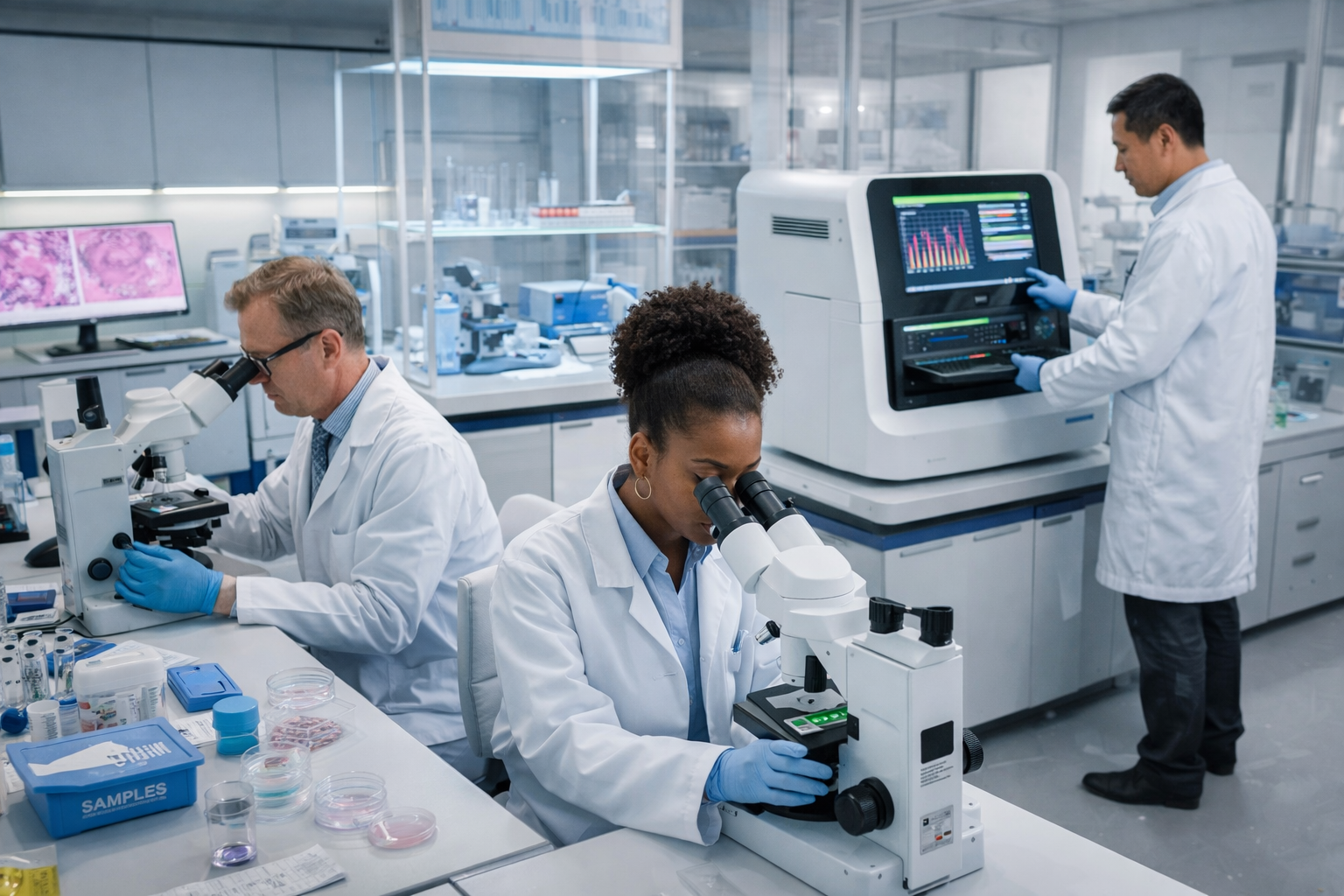
Genomic Profiling analyzes tumor DNA/RNA patterns to identify actionable targets and inform precision treatment strategies.
Genomic profiling looks for genetic changes and molecular signals that may influence:
It’s like identifying which “wires” are crossed in the tumor’s biology so treatment can be more precise.
Advanced profiling often depends on the quality of the tumor material. That’s why tissue handling and preservation can matter—especially if you’re trying to preserve the option for deeper analysis later.
Not always. It can uncover targets and clues—but decisions still require clinical context.
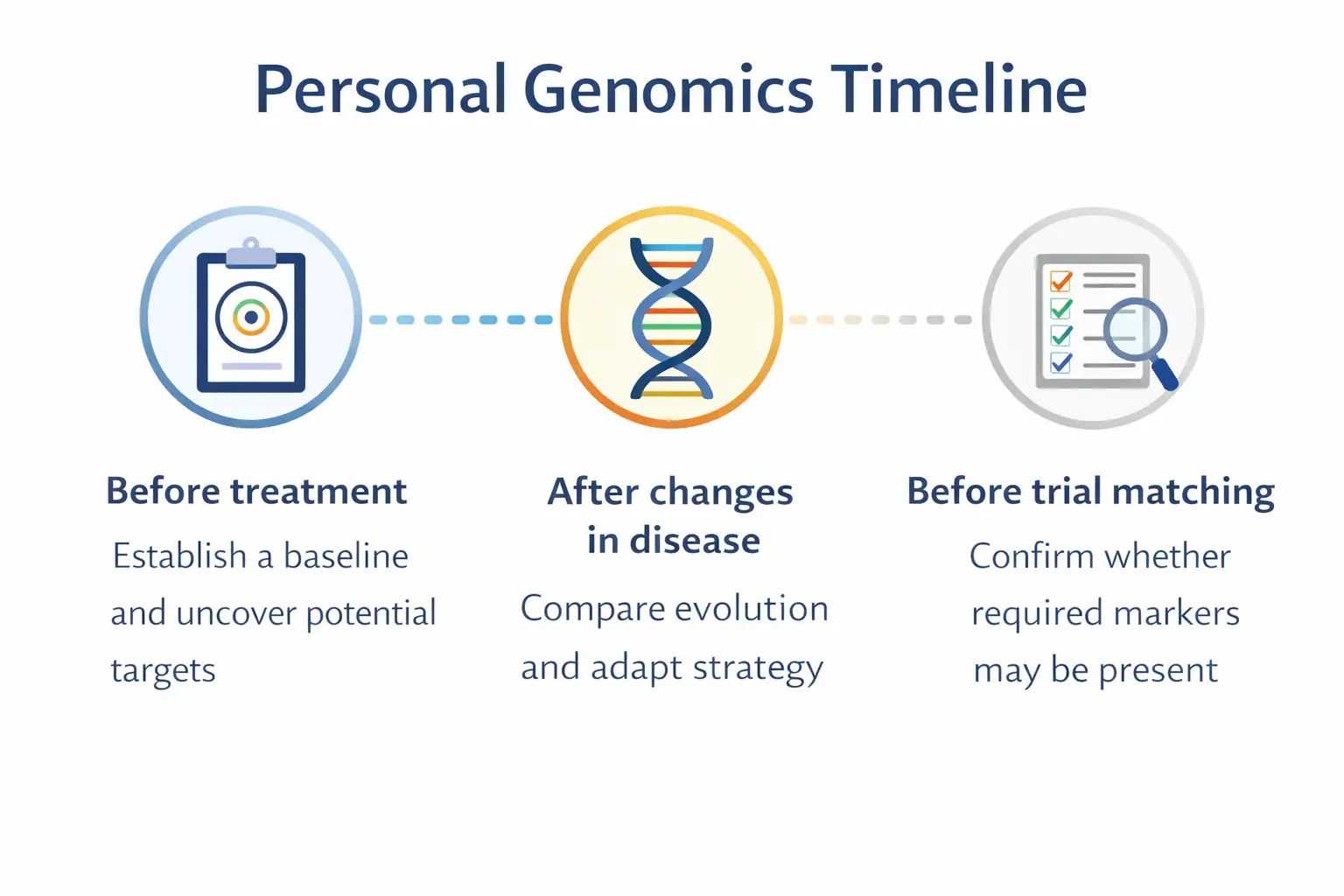
Not always. Tumors can evolve. Some patients benefit from repeat analysis over time.
Genomic Profiling analyzes the DNA and RNA patterns within a tumor to help identify mutations, biomarkers, and actionable targets that may influence treatment decisions. By looking deeper into the genetic makeup of the cancer, genomic profiling can help physicians better understand what is driving tumor growth and which precision treatment strategies may be most appropriate.
When viable tumor tissue is available, genomic profiling may support more personalized cancer care by helping match patients with targeted therapies, immunotherapy options, clinical trials, or emerging treatments based on the unique biology of their cancer. Instead of relying only on cancer type and stage, this testing can provide a more detailed molecular picture—helping doctors make more informed decisions and helping patients preserve more options as cancer care continues to evolve.
Genomic profiling looks for genetic changes and molecular signals that may influence:
Instead of treating cancer by appearance alone, genomic profiling reads the instruction manual hidden inside the tumor—helping identify which signals, mutations, or biomarkers may be driving its growth.
Advanced genomic profiling often depends on the quality of the tumor material available for testing. With standard FFPE preservation—a process that has been used for roughly 100 years—tumor tissue is treated with formalin and embedded in paraffin, which is useful for diagnosis but can leave DNA and RNA severely damaged, fragmented, or unavailable for deeper analysis.
That’s why tissue handling and preservation matter. If the goal is to preserve future options for genomic profiling, RNA-based testing, advanced molecular analysis, personalized treatment strategies, or clinical trial matching, how the tissue is handled at the time of biopsy can make a major difference later. Cryopreservation helps protect the biological integrity of the tumor sample so more of the cancer’s molecular information remains available when patients and physicians need it most.
Who is this for?
Genomic analysis may be especially important for patients with cancers where tumor mutations, biomarkers, and molecular subtypes can influence treatment planning.
Cancer types commonly associated with genomic testing include:
Lung Cancer
Lung cancer is one of the strongest examples of precision oncology, with treatment often influenced by biomarkers and tumor-specific mutations.
Breast Cancer
Genomic and molecular analysis can help clarify tumor behavior, recurrence risk, inherited-risk questions, and potential treatment strategies.
Colorectal Cancer
Colorectal cancer patients may benefit from biomarker testing related to targeted therapy, immunotherapy eligibility, and clinical trial matching.
Ovarian Cancer
Ovarian cancer is closely associated with hereditary and tumor-based genetic testing, including DNA repair pathway considerations.
Prostate Cancer
Advanced prostate cancer patients may benefit from genomic analysis to identify actionable mutations, inherited risk, or trial opportunities.

Not always. It can uncover targets and clues—but decisions still require clinical context.
Not always. Tumors can evolve. Some patients benefit from repeat analysis over time.